
Alachua Juvenile Release Paths
Florida DJJ operates this secure center for Dixie County and other counties. Youth may be held pending adjudication, disposition, or placement. Adjudication is the juvenile court's decision on the allegations. Disposition is the order about what follows. A youth may return to an approved custodian or move to commitment. A move is not release from all DJJ or court authority.
Most juvenile court information is confidential. There is no proper adult-style public roster search for a youth released here. Authorized family and counsel should rely on DJJ, the facility, assigned counsel, and the juvenile court. Public speculation based on a missing name is unreliable and conflicts with the protected nature of these records.
Confirm an Authorized Youth Release
Start with the official contact assigned to the case. Keep the legal name, date of birth, case number, and the caller's authority ready, but do not post them publicly. Staff may verify identity before discussing custody, transport, or placement.
- Contact assigned counsel, juvenile probation, or DJJ.
- Call the center for immediate facility routing.
- Ask whether the event is release or transfer.
- Obtain the court or DJJ instruction through the authorized channel.
- Follow the pickup and reporting directions for that youth.
Adult jail rosters, FDC offender search, and public release lists are not substitutes. They cover different people and legal systems.
Alachua Youth Record Boundaries
A juvenile record can involve court dates, detention status, placement, and protected facts. Access depends on law, the requester's role, and the record. Even an authorized person may receive only what an agency may disclose. Ask for the specific order or instruction needed, not a broad public history.
| Question | Correct source |
|---|---|
| Is pickup authorized? | Facility or assigned DJJ contact |
| Did detention change? | Counsel or juvenile court |
| Was the youth moved? | DJJ or facility after verification |
| What terms follow? | Court order and supervision contact |
Release from secure detention can still carry court terms. It does not necessarily mean that the case or agency direction ended.
Alachua Juvenile Center Contact
The facility can route an authorized inquiry but may limit details until the caller's role is verified. Respect that process and never seek another youth's information.
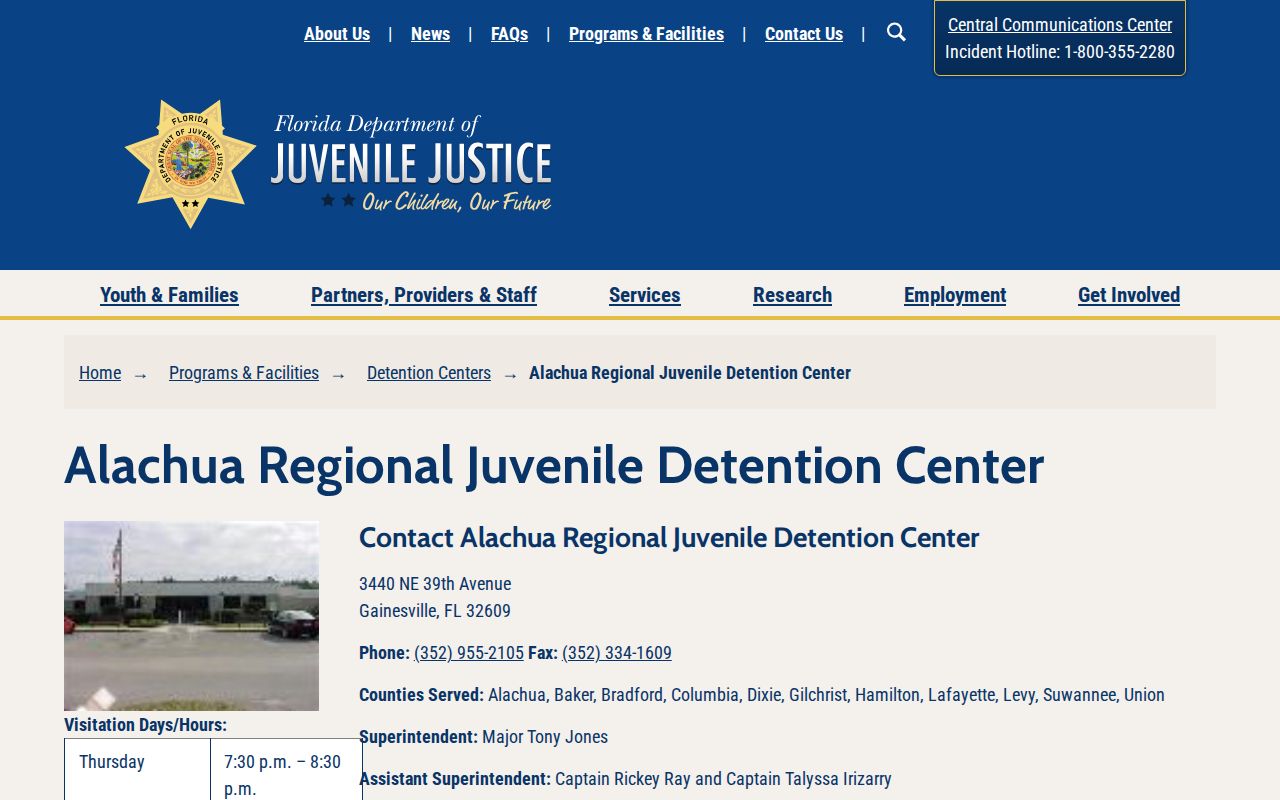
Alachua Regional Juvenile Detention Center
3440 NE 39th Avenue
Gainesville, FL 32609
Phone:
(352) 955-2105
Fax: (352) 334-1609
Operator:
Florida Department of Juvenile Justice
The center is outside Dixie County but officially serves Dixie youth. It is a county-serving facility, not a Dixie adult jail.
Alachua Juvenile Center Facts
The official DJJ page identifies the secure center, counties served, capacity, and contacts.
The official image records the facility information used here.
The average is not a prediction for one youth. Court action and case facts control each stay.
Dixie Youth Court Route
A court order can explain why detention began, changed, or ended. Juvenile access differs from a public adult docket. An authorized parent, guardian, or lawyer should ask counsel or the clerk for the lawful access route. The public Dixie Clerk gateway is not permission to publish juvenile details.
The order states legal authority. The center confirms operational custody or placement facts to an authorized person. Keep both roles clear.
Juvenile Versus Adult Release
DCSO handles adult county detention. FDC handles adult state imprisonment. DJJ handles juvenile detention. Each has distinct terms and access rules.
| System | Release route |
|---|---|
| DJJ juvenile detention | Authorized family, counsel, DJJ, facility, or court |
| DCSO adult jail | County booking/release record |
| FDC adult prison | State release and supervision record |
The Dixie custody overview helps with adult records, but youth information must stay in the confidential DJJ route.
Plan an Authorized Youth Pickup
Do not infer a pickup time, exit, or transport plan. The official source does not publish one universal release schedule. An authorized adult should confirm when to arrive, who may receive the youth, required identification, and which court or DJJ directions begin next.
Wait for direct confirmation before travel. A change can follow a hearing or placement decision. Movement to commitment is continued placement, not an ordinary return home.
Note: Protect the youth's name, photograph, case number, and placement details when seeking help.
Alachua Placement Is Not Release
A youth can leave secure detention and enter commitment placement. Departure from Gainesville does not mean return home or the end of DJJ authority. Authorized family should ask whether the change is home release, supervised placement, or commitment.
Transfer, placement, and release to an approved custodian are different events. Use the agency's exact term and never publish a private destination.
Dixie Family Release Questions
An authorized adult should ask who may receive the youth, what identification to bring, whether an order is needed, and when the next official contact occurs. Answers are case-specific. Staff may route the call to the assigned professional.
No fixed release door, waiting area, transport schedule, or universal property procedure was found. Inventing those details could expose private information.
Protect Dixie Youth Information
Do not post a youth's photo, detention dates, alleged conduct, papers, or placement. Share identity only with an agency, lawyer, court contact, or person authorized for the case. A public search cannot establish authority.
Adult tools can return unrelated people, and public indexes may omit protected juvenile material. A blank result is not release proof. Direct DJJ and court channels protect privacy and accuracy.
Youth Release Follow Through
After an authorized handoff, read court and DJJ instructions carefully. A next appointment, supervision term, approved address, school direction, or service referral may apply. Only the case team can explain those duties.
Keep orders provided to the family. The secure-detention endpoint is one event in the juvenile case, not a public adult discharge record.
Authorized Juvenile Follow-Up
Secure detention pending adjudication differs from commitment after disposition. The first is a short-term court and DJJ custody setting while the case moves forward. Commitment is a placement ordered within the juvenile system. A youth who moves between them has left this building but has not necessarily returned to the community. Authorized adults should ask for the exact destination category without seeking details they are not entitled to receive.
The official center page gives an approximate average secure-detention stay, but no individual release can be calculated from that average. A hearing date, court order, risk decision, transport arrangement, or placement availability may affect the actual timeline. Only the youth's assigned case contacts can apply those facts. The published bed count likewise describes the center and does not reveal who is present.
When the juvenile court changes detention, counsel can help interpret the order. Facility staff can address the operational handoff after authority is verified. DJJ can explain the agency placement or supervision route. Dividing the questions this way protects confidential information and gives the family the most direct answer from the office responsible for it.
A later need for a copy of an order should stay within the authorized juvenile case channel. Do not use adult criminal search fields, released-mugshot pages, or a broad public-record request as a shortcut. Juvenile confidentiality can limit access even when an adult record with similar facts might be public.
If a relative is unsure who is assigned, the facility can route the inquiry after the caller explains the relationship. Staff may not disclose placement without authority. That limit safeguards the youth and does not prove continued detention.
Use fax and phone with care. Confirm the recipient before sending protected papers and send no more identity data than staff request. Counsel can help decide which order or notice the authorized family needs.
Confirm the next official contact before the handoff ends. Keep the office name and instructions private. Future placement and reporting details may remain protected even after secure detention ends. If an instruction is unclear, ask counsel or the assigned DJJ professional privately rather than using an adult public-record tool.
Public Record Search
Sponsored Results