
Dixie County Release Endpoints
A release is a recorded event, not just an empty search result. A person may leave the Dixie County Jail after bond, a court order, dismissal, time served, or completion of a county sentence. The jail can also transfer someone to the Florida Department of Corrections, another county, federal authorities, or immigration authorities. Transfer ends one agency's physical hold but does not mean the person entered the community. Escape and death also remove a person from the physical count, yet neither should be called an ordinary release.
The best account uses the words in the source record. Dixie County Jail Control or a DCSO booking and release sheet establishes the jail event. A clerk order can show why the court permitted release. An FDC incarceration history can show entry into state custody or a later prison discharge. When supervision follows, a separate FDC record may show probation, parole, conditional release, or another status. Matching a date of birth, booking or MNI number, DC number, and court case number helps keep people with similar names apart.
- Discharge
- The formal end of a custody or supervision term recorded by the responsible agency.
- Time served
- A sentence outcome crediting custody already completed, as stated in the judgment or order.
- Detainer
- A request or hold that may send a person to another agency instead of into the community.
- Conditional release
- Release from prison followed by supervision under terms set by Florida law and the responsible authority.
Dixie County Release Types
Each endpoint points to a different record trail. A bond amount on a booking card shows a condition that may be met. It does not show that a surety was accepted, every hold cleared, or the gate process finished. The release date and time in the jail record answer that final operational question. Likewise, a dismissal in one case does not clear another warrant, sentence, or detainer.
| Recorded outcome | What it means | Best next source |
|---|---|---|
| Bond or recognizance | The court or schedule allowed release subject to stated conditions. | DCSO release record plus the court order |
| Dismissal or court order | The case record supplies legal authority, though another hold may remain. | Dixie clerk docket and DCSO release time |
| Time served or sentence complete | The local custody term ended after applicable credit or completion. | Judgment, jail credit, and release sheet |
| Transfer | Another jail, FDC, USMS, or ICE received the person. | Receiving agency and transfer record |
| Prison release to supervision | FDC custody ended while a legal supervision term began. | FDC release and supervision histories |
Does Dixie County Bond Prove Release?
No. Third Judicial Circuit Administrative Order 2026-001 supplies a pre-first-appearance bond schedule for Dixie County. The order permits, but does not require, release under that schedule, and a judge can set a different amount or condition. A SmartWEB card may show an aggregate or charge-level bond amount before payment, surety review, other holds, and release processing are complete.
Use the current Third Judicial Circuit bond order to understand the starting schedule, not to declare that someone left. Pair any bond entry with the court case and DCSO's actual release date and time. First appearance can also change the conditions. A person who does not bond out is brought before a judge, while the later gate record shows what the jail actually did.
A posted bond figure is not a release timestamp; obtain the DCSO event before saying custody ended.
Dixie County Release Record Fields
Ask for a defined booking episode instead of a vague inmate report. The public SmartWEB card can help identify the name, booking number, MNI number, booking date, charges, bond, arrest number, and court case number while the card remains available. The historic release proof is the booking and release sheet or jail-management release screen held by DCSO. A narrow request reduces identity errors and keeps the response tied to the right arrest.
| Requested field | What it can establish |
|---|---|
| Full name, aliases, and birth date | The identity attached to the booking episode |
| Booking and MNI numbers | Stable keys for the jail record |
| Booking and release date or time | When DCSO received and physically released or moved the person |
| Release method or authority | Bond, order, sentence end, transfer, or another recorded endpoint |
| Receiving agency or destination | Whether the event was a transfer rather than community release |
| Charge and court case identifiers | The bridge from the jail episode to the clerk docket |
| Booking photograph | The image tied to that booking, subject to exemptions |
Property records may be separate. When needed, request any nonexempt property-release receipt and transfer document as distinct items. Those papers can show money or property returned and movement between agencies. They do not replace the release screen.
Request Dixie County Release Records
The DCSO Records Division accepts requests in person at the sheriff's courthouse office or by mail. Florida law does not always require a written request or a statement of purpose, but writing the name, identifier, and booking date fixes the scope. DCSO warns that an under-investigation case will not be returned. Exempt details may also be redacted while nonexempt parts are produced.
- Identify the person with a full name and date of birth, booking number, or MNI number.
- State the booking date and ask for the booking and release sheet, jail release screen, release method, receiving agency, and booking photograph.
- Send the request to DCSO at 214 NE Highway 351, Suite L, Cross City, or mail it to PO Box 470, Cross City, FL 32628 with a sufficient self-addressed stamped envelope.
- Ask for an estimate before extensive work and request the specific statutory basis for any denial or redaction.
- Compare the returned event with the matching Dixie County court case and any receiving-agency record.
214 NE Highway 351, Suite L
Cross City, FL 32628
(352) 498-1220
Monday through Friday, 8:30 a.m. to 5:00 p.m.
Chapter 119 does not set one fixed response period. Section 119.07 calls for prompt acknowledgment and a good-faith response within a reasonable time. Default charges can reach $0.15 for a one-sided letter or legal page, another $0.05 for two-sided copies, actual duplication cost for other formats, and up to $1 for certification. Extensive work may carry a reasonable actual-cost charge. DCSO does not publish a local booking-photo fee, so obtain an estimate.
Dixie County Release Record Retention
Website visibility and agency retention are different. The live DCSO interface does not promise how long a card or photograph remains online. Florida General Records Schedule GS2 sets a minimum of one anniversary year after release for the described booking records, commitment and release lists, and inmate incarceration records. Jail docket books are permanent. An agency may retain a copy longer, and a different schedule can govern a specific series.
Florida Statutes section 119.07 governs access and redaction of nonexempt public records. Active criminal intelligence or investigative information can be exempt under section 119.071. Sealing and expunction can also change public access. Sealing generally keeps a qualifying record confidential subject to listed exceptions. Expunction generally directs qualifying criminal-history records to be destroyed or obliterated while FDLE retains the confidential copy allowed by law. Dismissal alone does not erase a booking.
Note: Ask whether an archived booking and release record exists instead of assuming a missing web card was destroyed.
Find Dixie County Released Inmates
Start with the last custodian, then confirm the legal result. The county jail, FDC, BOP, ICE, and the juvenile system do not share one complete release list. A person may also have more than one custody episode. Record the source and access date and attach each conclusion to its agency and event.
- For a local booking, use the DCSO Arrest Search to capture the booking, MNI, and case identifiers. Its default view is bookings, not releases.
- Call Jail Control at (352) 498-1231 extension 221 when the card is missing or the status is unclear. Ask whether the episode ended in release or transfer.
- Open the Dixie court record search and read the correct case for bond, dismissal, sentence, jail credit, probation, warrant, or amended-order entries.
- Use FDC by DC number or name if the person entered Florida prison or state supervision. Read the current status and the incarceration and supervision histories together.
- Use VINELink for one-person custody information and future alerts. Use BOP, ICE, or the federal docket for a federal or immigration path.
- Request the DCSO release record when online sources do not document the physical endpoint.
A released person often drops off a live roster, so absence alone cannot distinguish release from transfer or a data change.
The wider same-day issue is covered in the Dixie County released-last-24-hours explanation. It leads with the records fallback because DCSO publishes no labeled release feed.
Dixie County SmartWEB Release Trap
DCSO SmartWEB opens with “BOOKED Last 24 Hours.” It accepts a last, first, or middle name, a begin and end booking date, sort order, and ascending or descending display. Returned cards can show a photo, status, booking and MNI numbers, booking date, aggregate bond, charges, statutes, case numbers, and arrest data. No public control labeled recent releases, released last 24 hours, or released last 72 hours was found.
The official DCSO Arrest Search interface shows why the heading must be read before treating a list as releases.
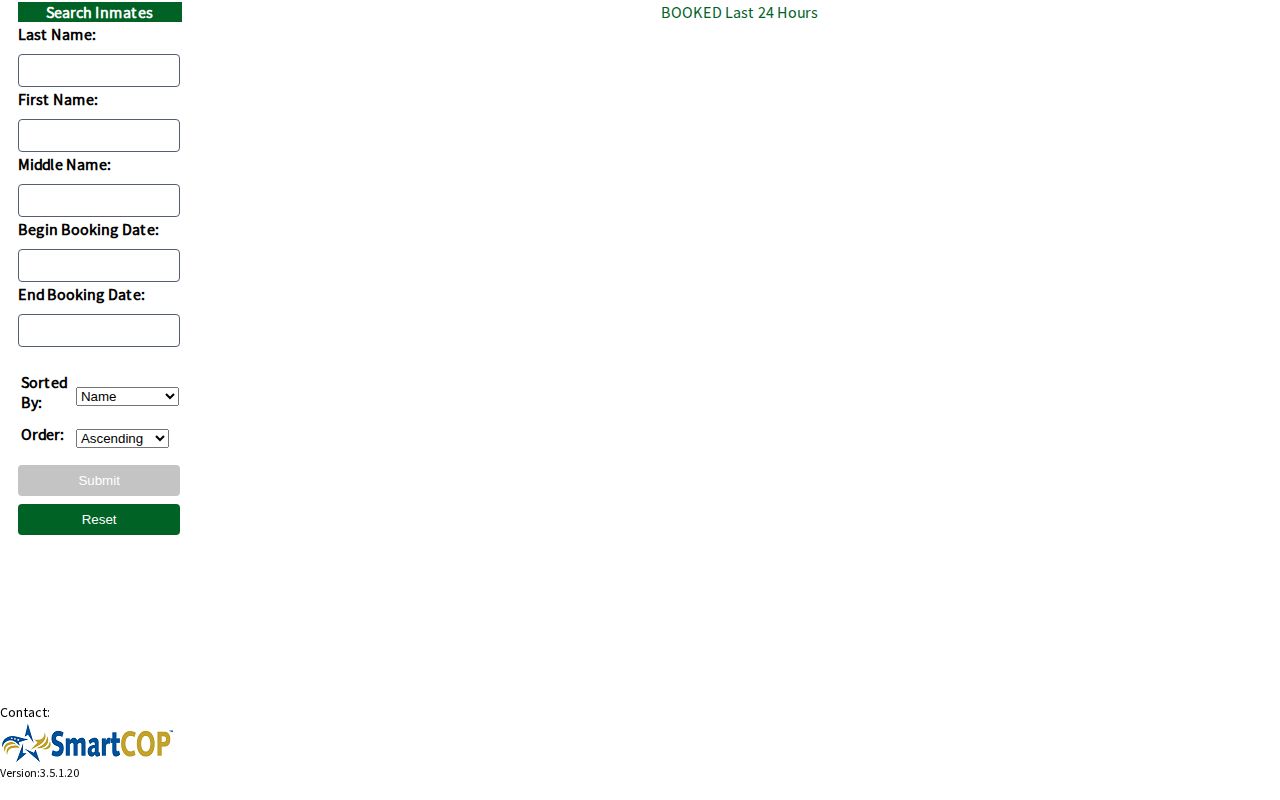
The captured interface is a booking and current-status aid. Hidden generic release-date inputs in the delivered page code are not a working public feed and should not be called one.
Florida Release Search for Dixie County
The Florida Department of Corrections Offender Search covers felony offenders sentenced to state prison or state supervision. It excludes a person sentenced only to county jail or county probation. Search by the six-character DC number when known. A name search uses prefix matching, so compare the photograph, physical details, aliases, offense county, case, and dates before choosing a result.
| Search field or option | Use and limit |
|---|---|
| Last and first name | Prefix-based match; may return longer names |
| DC number | Best exact key; six characters |
| Alias search | Broadens identity matching |
| Photo and result display | Helps compare records but does not prove present status |
| Release database | Includes already released and scheduled-to-release records; updated nightly |
Open the detail. A past Release Date that matches the final Date Out-Custody is stronger proof of a prison exit than a future value. “Current Release Date” can change. Community-supervision history can show what followed. ACTIVE means active supervision, ACTIVE SUSPENSE can mean the person is temporarily in jail or another facility, and ABSCONDER means whereabouts are unknown with a violation warrant issued. None of those labels should be simplified to “free.”
The FDC name and DC-number screen demonstrates the state search route used after an FDC sentence or transfer.
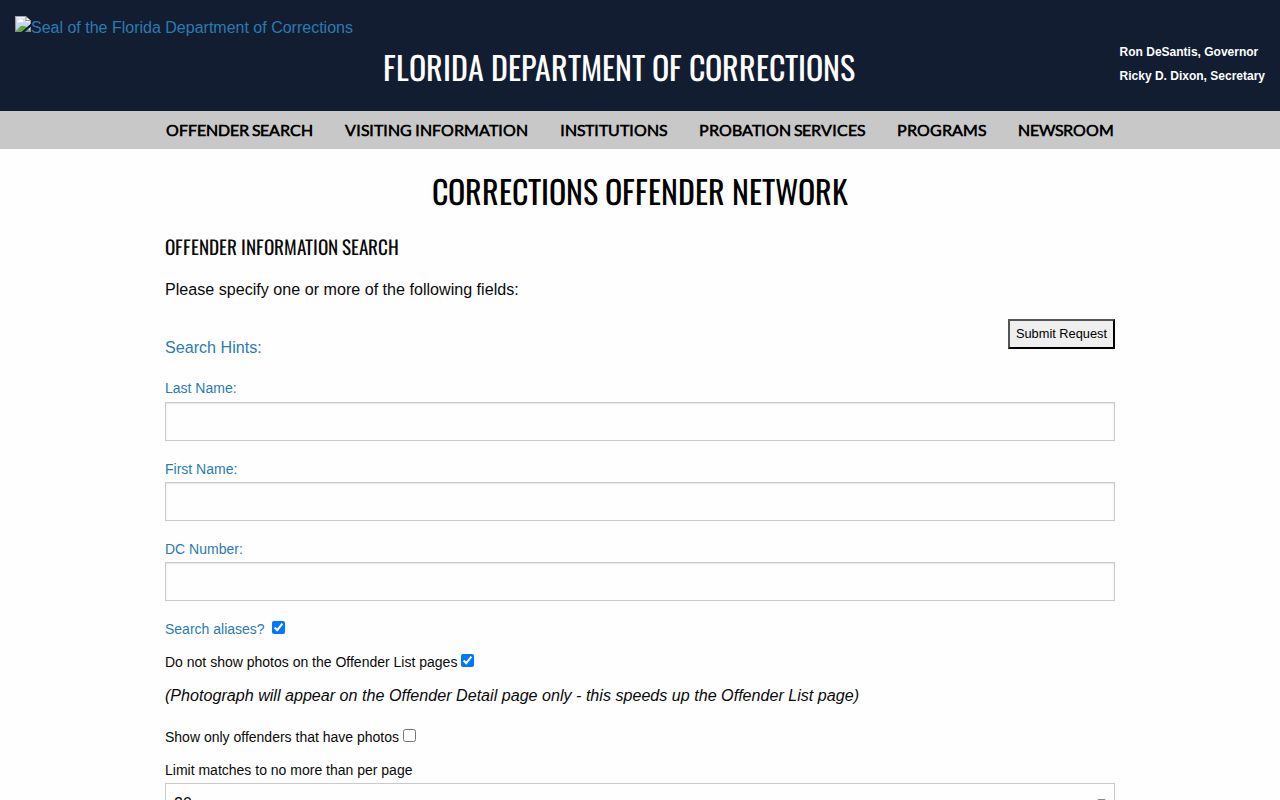
This screen belongs to the state system. It cannot certify a bond release from the Dixie County Jail.
Dixie Release Records Meet Court Orders
Dixie misdemeanors route through County Criminal and felonies through Circuit Criminal, but the clerk links both through one CiviTek gateway. SmartWEB's case number is the strongest bridge from a booking card to the docket. Read the entries in order. Bond actions, pleas, adjudication, dismissal, sentence, jail credit, probation, warrants, amended orders, and termination can explain the legal path.
The docket and gate record serve different roles. A court order can authorize release before the jail completes processing. Another case or detainer may still block community release. In the other direction, DCSO can transfer someone while the local case remains open. The safest statement names both events, such as the court's order in one case and the jail's later recorded release or transfer.
Note: When a docket line is terse, request the imaged order by case number and entry date from the Dixie County Clerk.
Cross City Release Transition Program
Cross City Correctional Institution adds a local state-prison layer to Dixie County release research. Its official FDC page lists a 100-hour Transition Program among institutional programs. That fact shows a structured transition resource exists at the institution. It does not prove that a named person qualified, attended, completed it, or received a specific service.
A release from Cross City CI, its work camp, or East Unit remains an FDC event. Use the statewide release record and any supervision history. FDC Community Corrections manages community supervision when it follows. The local program is context for the prison release process, not a substitute for the official date, discharge record, or personal release instructions.
Dixie Release ID and Property Records
Florida law directs FDC and partner agencies to help qualifying Florida-born inmates obtain a certified birth certificate and state identification before sentence-expiration release. It also calls for help with a Social Security card, subject to statutory exceptions such as some detainers and release circumstances. This applies to the FDC release process, not every county-jail bond release.
Property paperwork has its own value. GS2 describes receipts for money or property returned at release and transfer orders that verify property movement as parts of inmate incarceration records. If returned property or a transfer is disputed, ask DCSO or FDC for that record separately. A property receipt can support what was handed back. It does not prove why legal custody ended.
Dixie Release Alerts and Federal Paths
Florida Statewide VINE covers FDC offenders and Florida county jails. Search one person and register for a custody-change notice, but read the event name. Release, transfer, escape, return to custody, work-release placement, and death are distinct alerts. VINELink is not a historic county-wide release archive. A missing result also cannot prove release. The separate Dixie County VINELink release check explains registration and the direct FDC written-notification layer.
No BOP or ICE detention facility was identified in Dixie County, but a local case can still lead to federal or immigration custody. The BOP Inmate Locator covers federal inmates from 1982 onward. “Not in BOP Custody” means only that BOP no longer holds the person. The ICE Online Detainee Locator covers adults in ICE custody and people released from ICE custody within its limited window. The U.S. Marshals prisoner information route explains the federal pretrial and transfer role, but USMS has no comparable public historic locator. The responsible federal docket and order are often the durable sources.
Florida registries answer narrower questions. The FDLE sexual offender and predator search can show “Released - Subject to Registration,” photographs, and dated status details for people covered by those registration laws. The FDLE Career Offender Registry covers the designations defined by its separate statute. Neither registry covers all Dixie County releases, and a no-match is not evidence that an ordinary detainee remains in custody or was released.
Dixie County Release Systems Next Door
The Dixie County Jail and Cross City prison complex are neighbors on NE 255th Street. Their street numbers are 386 and 568. The close addresses can make a search result look like one local custody system, but the agencies and records are separate. DCSO SmartWEB covers the county booking path. FDC Offender Search covers state prison and state supervision.
A move from the county jail to the Cross City complex is continued custody. It is not community release. A move among Cross City CI, the work camp, East Unit, or another FDC prison is also a transfer. Always start with the agency name, not “Cross City” or the road name.
Dixie Released Versus In Custody
The following comparison keeps each source within its legal and technical scope. A negative result is only one clue. Follow the identity and episode through the next custodian.
| Question | Primary source | What confirms the endpoint |
|---|---|---|
| Still in Dixie County Jail? | DCSO SmartWEB and Jail Control | Current status or direct jail confirmation |
| Released or transferred by DCSO? | DCSO Records Division | Booking and release sheet or release screen |
| In or released from state prison? | FDC offender detail | Current location, Release Date, Date Out-Custody, and history |
| Under state supervision? | FDC supervision search | Supervision type, dates, and status |
| Out of BOP custody? | BOP locator | BOP release date and system-limited status |
| Juvenile release? | DJJ, counsel, family, or juvenile court | Authorized confirmation, not an adult public-name search |
Dixie County Release Facilities
Dixie County release paths include one county detention facility, three linked FDC units, and a regional juvenile center that serves the county. Each facility page follows the correct agency instead of treating every departure as a county-jail release.
- Dixie County Jail: DCSO confirms direct release or transfer through Jail Control and its records.
- Cross City Correctional Institution: FDC records the prison release, discharge, transfer, and supervision path.
- Cross City Work Camp: this satellite uses the same statewide FDC release system.
- Cross City East Unit: a move from the unit may be an internal FDC transfer rather than release.
- Alachua Regional Juvenile Detention Center: authorized family, counsel, DJJ, or the juvenile court should confirm a youth's release or placement.
Public Record Search
Sponsored Results